


Power Pilates – what is it and why is it worth trying?
Power Pilates is a rapidly growing variation of Joseph Pilates' exercise system, aimed at individuals who have mastered the basics and wish to diversify their training. What distinguishes it from the traditional version? What benefits does it offer for health and well-being? Find out how to prepare for a power Pilates session!
Power Pilates – what is it?
Power Pilates is a modern version of the classic exercise system created in the 20th century by the German athlete Joseph Pilates, whose goal was to develop a comprehensive full-body workout.
Individuals who regularly participate in classes or work on their physique independently gradually strengthen various muscle groups (including core, back, and leg muscles) and endurance.
In power Pilates, the emphasis is placed on dynamic, intense movement, and for this reason, it is recommended for intermediate or advanced participants – appropriate fitness level and precise mastery of basic exercises are essential conditions.
How does power Pilates differ from traditional Pilates?
Power Pilates – unlike the traditional form – involves much more intensive exercises performed in sequences. The entire session is more dynamic and requires greater muscle engagement.
The use of weights in exercises is a characteristic feature of this type of class – in the classic variant, equipment such as resistance bands or straps or balls are typically used, but not weights.
Power Pilates vs. Power Yoga – which one to choose and can they be combined?
The choice between power Pilates and power yoga depends on individual preferences and training goals. Both forms of exercise can be effective in improving strength, endurance, and flexibility.
What, then, is the fundamental difference between these forms of activity? Power Pilates focuses mainly on working with and strengthening deep muscles, while power yoga leads to intense full-body stretching. There are no obstacles to combining the two types of training – this way, you can gain diverse benefits and satisfaction from self-development.
However, in such a case, it is important to remember about body regeneration and rest.
Learn more about the differences between yoga and Pilates in our article: What is the difference between yoga and Pilates?
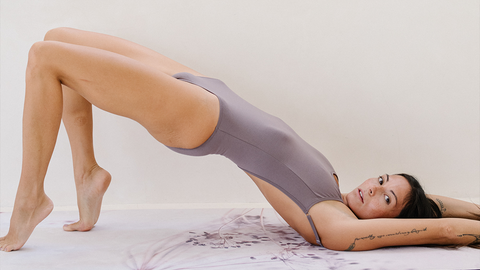
Benefits of regular Power Pilates practice – who are the classes suitable for?
Systematic power Pilates training can bring many health benefits, including:
- overall improvement in fitness and physique,
- increased body flexibility,
- reduction of muscle tension,
- assistance in building conscious range of motion,
- improvement of coordination and body endurance.
Power Pilates also has a beneficial effect on well-being and stress reduction. Despite its intensity, it allows the mind to relax, and you to derive satisfaction from perfecting your skills during a varied workout.
Preparation for training – what accessories are needed for power Pilates?
The most important elements of any training are, of course, appropriate sportswear (e.g., for yoga) and an anti-slip exercise mat, which will be useful in all variations of Pilates. To achieve comfort and complete freedom of movement, it is worth opting for a fitted set, such as 7/8 length exercise leggings and a top made of elastic, high-quality material – the length of sleeves or legs depends on individual preferences.


A good Pilates mat should be stable and provide support during an intense session. In such a case, rubber with a thickness of about 5-10 mm works great.
Sometimes power Pilates also uses additional equipment, which includes accessories such as weights, rollers, and balls. Moreover, exercises can also be performed on special machines, designed by Joseph Pilates himself, e.g., a reformer.
In both cases, we are dealing with a varied workout, so don't worry if you start your power Pilates adventure on a mat. However, those who want to try advanced equipment can take special classes at a fitness studio – professional and well-equipped studios provide access to it.
Power Pilates – basic exercises and how often to perform them?
What distinguishes exercises performed during power Pilates from traditional classes is not their type and form, but their pace. In both cases, breath and body control play an important role. Here are some example movements:
- roll up – stand straight, take a deep breath, and slowly lower yourself down the spine vertebra by vertebra, then rise back to the starting position;
- double leg kick – lie on your stomach, clasp your feet, lifting your head, chest, and legs; in this position, kick your heels twice towards your buttocks;
- swimming – lie face down, alternately raise your right leg and left arm, keeping your head and chest above the mat at all times.
Given that power Pilates requires better physical condition, it is worth adjusting the frequency of sessions to your capabilities so as not to overexert your body.
Consistency and gradual development of fitness and personal skills are most important. The intensity of exercises can be decreased or increased depending on individual needs, although it should always be kept in mind that this will be a greater effort than in a classic Pilates session.


